
Why Sri Lanka’s Plantation Productivity Stagnated While Others Moved Ahead
- Viraj Weerasooriya

- Jan 11
- 6 min read


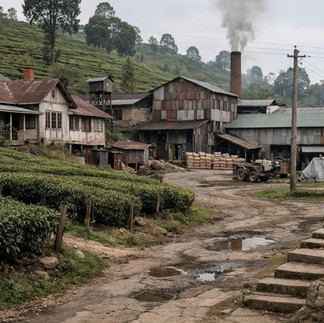


Productivity didn’t decline overnight. It stalled in transition.
For decades, Sri Lanka stood tall among plantation economies. Tea, rubber, coconut—and later oil palm—were once benchmarks of efficiency, quality, and global relevance.Yet today, Sri Lanka’s plantation productivity tells a different story: flat yields, rising costs, shrinking margins, and increasing dependence on protection rather than competitiveness.
Meanwhile, peers didn’t stand still.
Countries like Malaysia, Indonesia, and even Vietnam—once far behind—have moved decisively ahead.
This gap didn’t appear overnight. It was created by choices, inaction, and missed transitions.
We Confused Legacy With Sustainability
The plantation sector in Sri Lanka has traditionally depended on the enduring legacy of "Ceylon Tea". With global acclaim, a historical reputation, and well-established brands, it fostered a sense of stability that was rarely challenged. Over time, this reputation served as a protective barrier, shielding existing systems from examination instead of encouraging their development.
While legacy helped preserve identity, it also slowed reinvention. Plantation operations were treated as heritage assets rather than dynamic production systems that needed continuous redesign. Productivity discussions became uncomfortable because they challenged tradition, and change was often seen as a threat to what had already been built. In contrast, competitors treated legacy as a foundation—not a ceiling—and allowed systems to evolve without erasing identity.
Labour Structures Were Never Reimagined
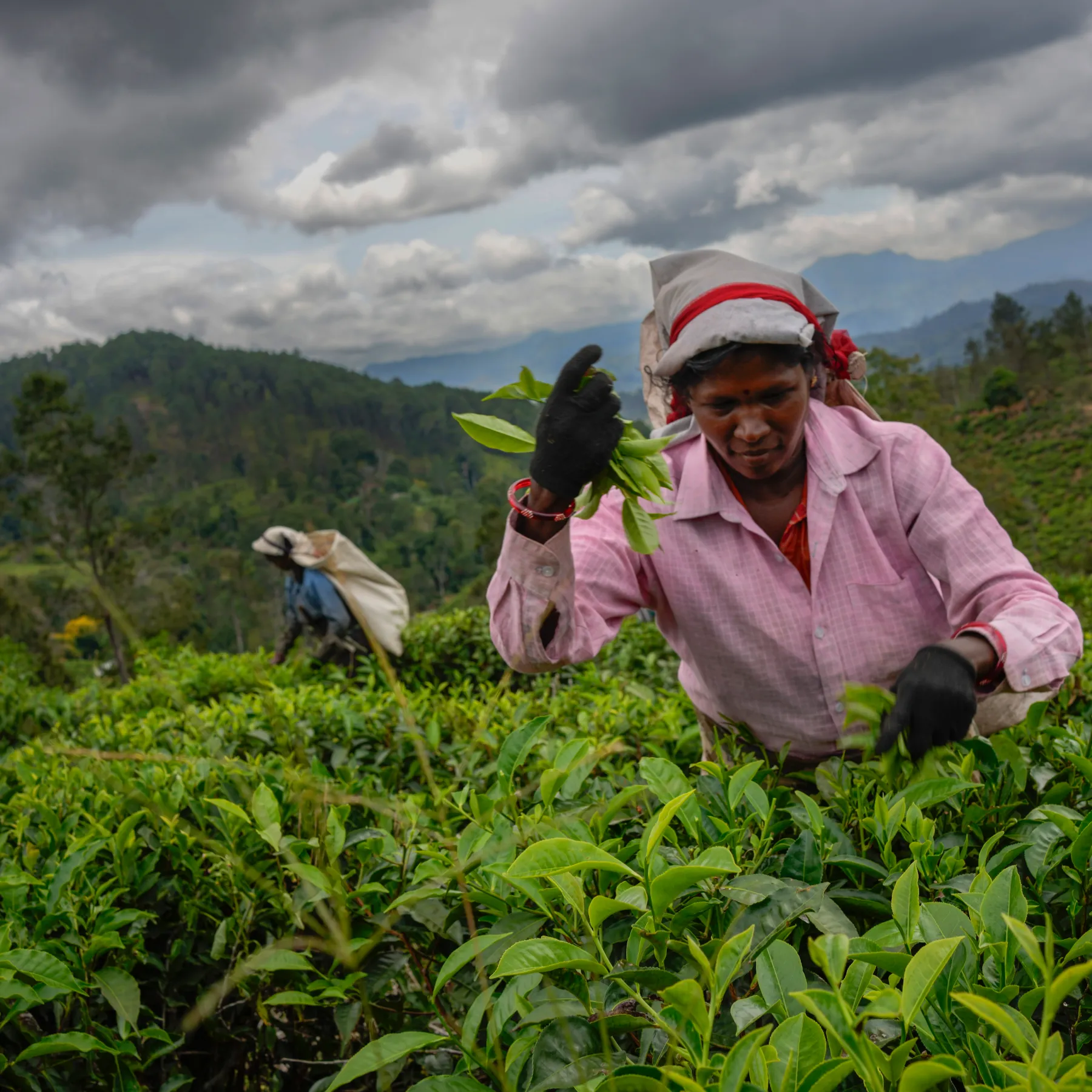
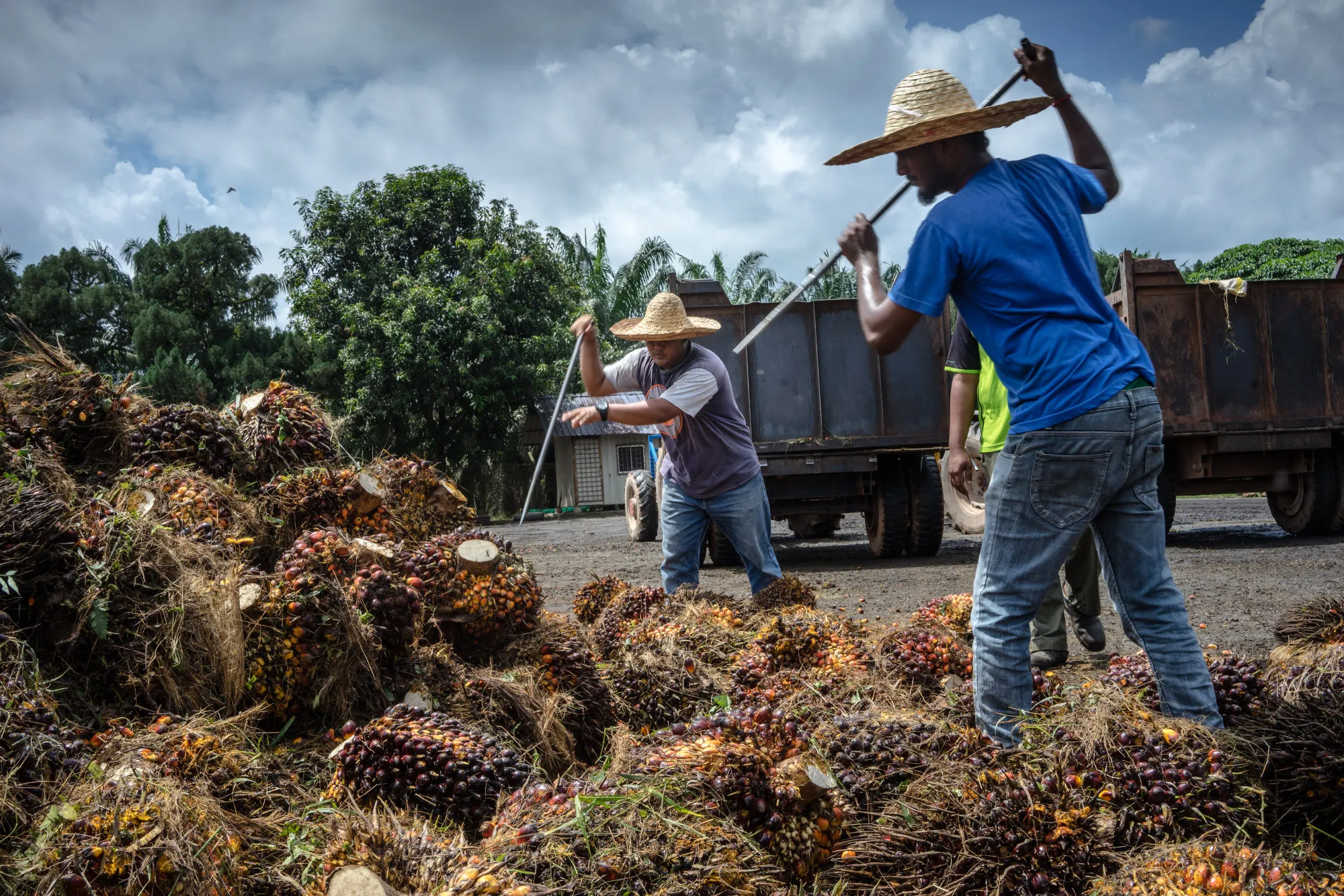

Labour has always been a key component of plantation agriculture, yet Sri Lanka’s labour model remained largely unchanged despite evolving conditions. Daily operations continued to be characterized by individual task allocation, weak output accountability, and incentive structures that were not tied to productivity. Labour planning prioritized attendance over efficiency, quality, or yield.
In other plantation economies, it was recognized that improving productivity required a reorganization of work. Gang-based harvesting, productivity-linked incentives, and structured supervision transformed labour from merely a cost to an optimized system. However, in Sri Lanka, the focus remained on safeguarding employment rather than redesigning work processes. While jobs were maintained, productivity did not improve.
Mechanisation Was Treated as a Threat, Not a Tool
Mechanisation in plantations is rarely absolute; it is incremental and context-specific. Across Southeast Asia, constraints such as terrain, weather, and crop type did not prevent progress—they shaped it. Partial mechanisation, better tools, improved transport methods, and smarter logistics gradually reduced fatigue, improved harvesting timeliness, and limited yield losses.
In Sri Lanka, however, mechanisation debates often became ideological. Constraints were used to dismiss possibilities entirely, rather than to explore workable improvements. Because full automation was not feasible, incremental gains were overlooked. While others asked how to improve efficiency by small margins across many activities, Sri Lanka remained locked in an all-or-nothing mindset—and gained neither.
Others asked: What can we improve by 10–20%? We asked: Why this won’t work at all?
Data Stayed on Paper While Others Went Digital


Perhaps the most damaging gap in Sri Lanka’s plantation productivity lies not in labour or land—but in how decisions are informed.
Across many estates, operations still depend heavily on manual registers, handwritten logbooks, and fragmented spreadsheets. Field data is often captured late, consolidated retrospectively, and reviewed as summaries rather than used as live operational signals. As a result, managers are forced to act on averages and intuition instead of real-time realities.
Why Field Teams Struggle to Trust Digital Data
At the ground level, trust in data is shaped by daily practice. Field Supervisors, Assistant Managers (AMs), and Estate Managers are accustomed to relying on what they can personally observe, verify, and sign off. Muster sheets, harvest registers, and verbal confirmations remain the most trusted sources of truth—not because they are more accurate, but because they are familiar and controllable.
Digital systems change this dynamic. When data is generated automatically—through field entries, weighbridges, or system calculations—it reduces the space for judgment-based adjustment. When system outputs contradict expectations built on experience, the instinctive response is often to question the data rather than the operation.
A Daily Operations Example: Harvest & Labour
Consider a routine harvesting day.
A field supervisor knows how many workers were deployed, which fields were harvested, and roughly how much crop should have been collected. If the system later reports a lower yield per man-day or a longer harvest interval than expected, the first reaction is rarely to investigate inefficiencies in the field.
Instead, the response is often:
“The field was harvested properly.”
“The workers were present.”
“We cleared the crop.”
When numbers don’t align with expectation, manual registers and personal experience are used to defend performance. The system is seen as lacking context, rather than revealing losses, delays, or gaps in supervision.
Quality: Where Distrust Deepens Further
The same pattern emerges in quality assessments.
When digital records show higher deductions for underripe or overripe bunches, the assumption is often that grading was too strict, weights were misread, or data entry was incorrect. Rarely is the immediate conclusion that harvesting standards slipped or that harvest intervals were stretched beyond optimal limits.
As a result, data is tolerated for reporting—but resisted as a decision-making tool.
The Real Barrier Is Control, Not Technology
For many supervisors and managers, manual records represent ownership and accountability. Digital data feels distant, centralized, and harder to influence. Until system data is seen as an extension of field reality—rather than an external audit—trust will remain limited.
When data is not trusted, it becomes passive. It is recorded, filed, and reported—but not used to correct course. Productivity losses then accumulate quietly, hidden behind familiarity and routine.
In plantations, data does not fail because it is wrong. It fails because it is not believed
Policy Protected Inefficiency Instead of Enabling Transition
As plantation competitiveness weakened, Sri Lanka’s policy response focused largely on protection rather than transformation. Import restrictions, price controls, and short-term relief measures were introduced to stabilize the sector, but these interventions addressed symptoms instead of underlying inefficiencies.
While such policies offered temporary relief, they also reduced the urgency to reform. When losses are buffered and margins protected, the incentive to redesign labour models, improve field productivity, or invest in modern operational systems diminishes. Over time, protection became a substitute for productivity, allowing structural weaknesses to persist.
More critically, policy attention shifted away from operational transformation. The national conversation centered on survival—preserving employment, managing costs, and maintaining output—rather than on how plantations could become more efficient, data-driven, and competitive in the long term.
In contrast, peer plantation economies used policy as a transition mechanism. Governments accepted that productivity gains would require difficult changes: restructuring operations, enabling mechanisation where feasible, encouraging scale, and supporting technology adoption. Short-term disruption was acknowledged, but it was tolerated in pursuit of long-term resilience.
In Sri Lanka, repeated protective interventions gradually became a comfort zone. Instead of acting as a bridge to reform, policy buffers delayed hard decisions. Productivity stagnation was masked, not corrected—and the gap with regional peers quietly widened.
A Historical Pattern Worth Noting
This pattern became particularly visible during periods when declining yields and rising costs triggered calls for urgent relief. Policy support was extended to stabilize operations and protect livelihoods, but it was rarely paired with mandatory productivity benchmarks, operational restructuring, or system-level reform requirements. Once immediate pressure eased, momentum for change faded, and estates reverted to familiar practices. The opportunity to use crisis as a catalyst for transformation was repeatedly missed.
We Optimised Outputs, Not Systems
Perhaps the deepest issue in Sri Lanka’s plantation sector is not labour, policy, or technology in isolation, but the way change itself was approached. Over time, the focus shifted toward fixing visible outputs, rather than redesigning the systems that produced them.
Incentives were introduced without reliable measurement. Training programs were rolled out without rethinking workflows. Technology was added on top of existing processes, without reshaping how work actually moved from field to factory. Each intervention addressed a symptom, but left the underlying structure untouched.
In contrast, other plantation economies took a system-first approach. They re-engineered the entire value chain—connecting field operations, crop collection, transport logistics, processing, quality assessment, and payments into a single, measurable flow. Each link was monitored, optimized, and aligned with the next. Productivity improvements emerged not from one breakthrough, but from many small, coordinated gains across the system.
Productivity, in this sense, is not the result of a single intervention. It is the outcome of aligned systems working together consistently.
The Hard Truth
Sri Lanka did not fall behind because it lacked knowledge, land, or capable people. It fell behind because difficult conversations were postponed, structural reform was deferred, and short-term protection was mistaken for long-term progress.
The productivity gap visible today is not accidental. It is the cumulative result of years of delay—of choosing comfort over change, and preservation over reinvention.
Looking Ahead
The story does not end here.
Sri Lanka still possesses strengths that many competitors do not: experienced plantation communities, established estates, and deep operational knowledge. What has been missing is not potential, but execution.
In the next post, we will explore what Sri Lanka still has that others don’t—and how productivity recovery is still possible if we act differently.
Because stagnation is not destiny.
But change requires honesty, courage, and disciplined execution.


Insightful article.It clearly highlights how improving productivity and modernization is key for Sri Lanka’s plantation sector to stay competitive.💯